最新资讯
Latest News
At the end of April, Andy, a Year 12 pupil at Wellington Shanghai, stood on the podium at the global finals of the 2026 Conrad Challenge, where he and his team were awarded the Power Pitch prize in the Cybertechnology & Security category. Earlier in the year, they had already claimed the national title in China.

Andy holding his trophy at the 2026 Conrad Challenge global finals

For Andy, this was simply another milestone in his journey through various competitions. When asked why he participates in so many, his answer is straightforward: "It's fun, and it proves I'm not wasting my time."
Andy's story begins with a moment of fear underwater. Last year, during a dive in Malaysia, his parent followed an instructor to see sea turtles in another area. Andy began to feel anxious. Later, discussing the experience with a friend, he learned that misunderstandings during dives are common, as underwater communication is mostly limited to hand signals. The two quickly came up with an idea: could they invent a device that allows divers to reliably send messages underwater?


DiveGuard uses low-cost underwater acoustic communication to enable real-time, text-level messaging between divers and surface teams.
After researching existing products, they discovered the main challenges: low bandwidth, high latency and severe data loss. Andy took the lead on the software side, compressing information to its smallest size and sending repeated confirmations to ensure messages weren't lost. Ultimately, they developed a portable device capable of monitoring depth and air pressure, as well as enabling text communication between divers and a base station.
This project became their entry for the Conrad Challenge. "To be honest, we didn't make it for the competition," Andy says. "We just wanted to solve a real problem."

This habit of starting with real-world issues has shaped Andy's entire Secondary School journey. From playing with Lego as a child and attending robotics classes, to later experimenting with circuit boards, writing code and 3D modelling, Andy's path is far from that of a traditional academic high achiever. He's more like a gamer, constantly unlocking new skills. Andy has competed in maths, physics and programming contests, VEX robotics, debating and badminton. He has also achieved top grades in maths repeatedly, and his physics marks are consistently among the highest in his year group.
“
Winning something in a competition is a kind of validation. It proves I haven't wasted my time. But more importantly, competitions teach you a lot. Some of it is hard skills, but some is social ability.

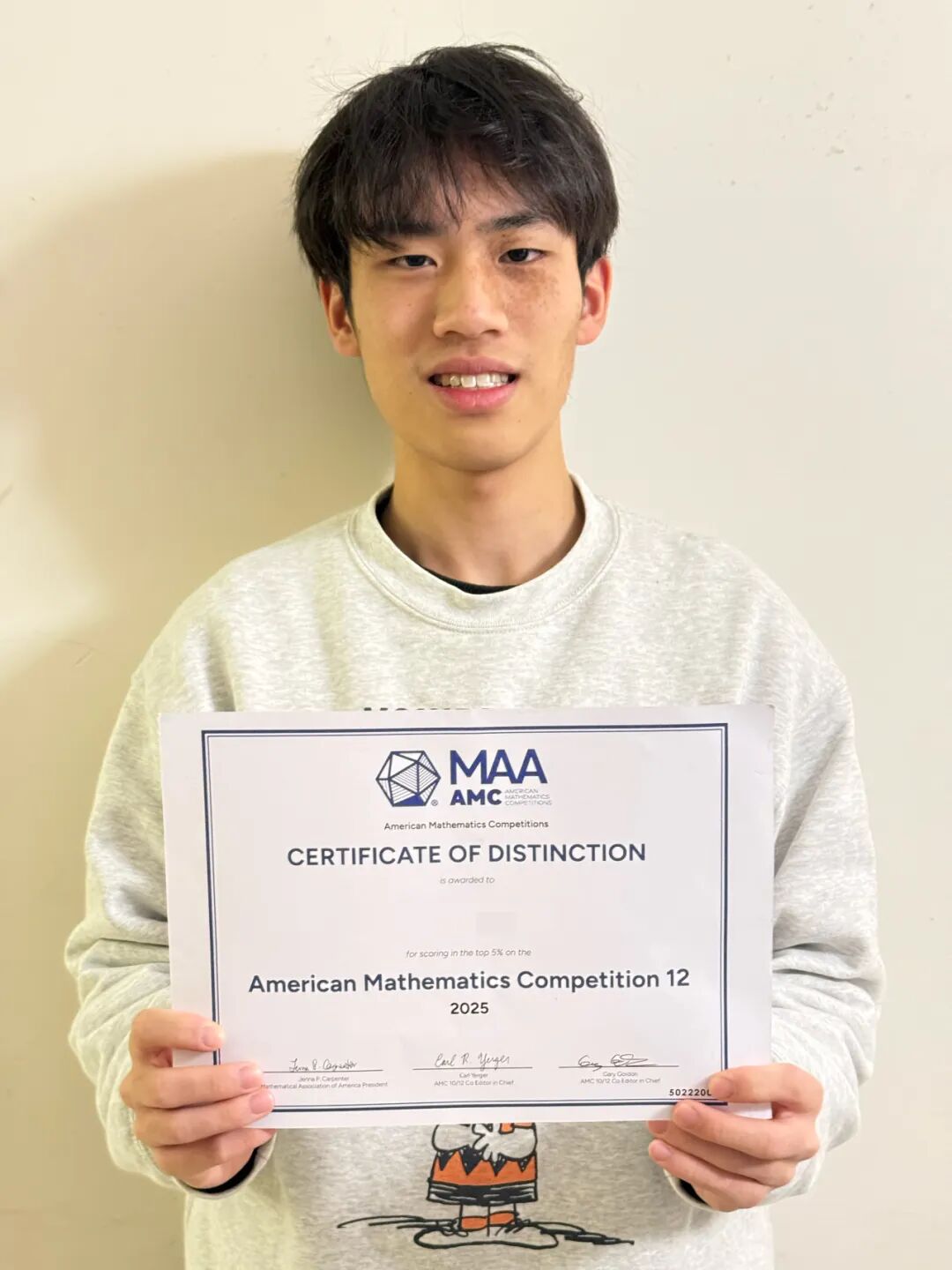

That social ability proved invaluable at the Conrad Challenge national finals in China. At the exhibition, Andy's team didn't rely solely on their display board; they designed interactive games, custom badges and towels and even spoke to the judges one-to-one. These small, thoughtful touches helped secure their championship win. The Power Pitch award at the global finals recognises teams that excel in communication and marketing, service, progress and innovation. Andy credits competitions for teaching him these skills: good technology needs to be understood, and being understood requires effective communication.
Andy says the school hasn't given him many 'standard answers'. Instead, it has provided the freedom to explore. When asked which teacher has influenced him most, he names Mr Oyugi, Head of Computer Science – a man with "big ambitions and wildly imaginative ideas". "He doesn't tell you how to do things," Andy explains. "He just says, 'You could try this,' and then leaves you to figure it out." In this environment, Andy progressed from tinkering with circuit boards and chip programming, to winning national medals and ultimately reaching the global finals.


Naturally, the journey has not been without setbacks. Asked if he has ever felt lost, Andy recalls an experience before joining Wellington Shanghai. He applied to a leading independent school in the UK. Although his written entrance exam scores were well above the requirement, he was rejected because his interview was not fluent enough. "That experience made me realise that life isn't just about studying – it's about doing interesting things," he reflects. "Learning isn't just about passing exams."
This is why Andy prefers combining programming with hardware – it results in something tangible, something people can actually use, even if it simply brings a smile to those around him. He has collaborated with teammates to build an agricultural robot that can accurately target pests, as well as a small robot that can talk and dance.

The agricultural robot that Andy is builiding with his schoolmates
When asked about his role models, Andy mentions the founders of miHoYo, the Chinese video game developer: "A few university students making games in their dormitory, gradually growing bigger, getting acquired and everyone enjoying themselves. That process of going from zero to one, from nothing to something, from a small piece of software to something much larger that actually influences people's lives – that's what I want to do."
Andy says he often encounters crowdfunding posts on social media about children who are ill or unable to afford school. "Behind every number is a family." He wants to use technology to genuinely help others – not necessarily through a major platform or a large business, but by creating something that "helps people live more safely and better".
At age 17, Andy still has a long journey ahead. But for now, he has found his rhythm: observe life, identify a problem, and then get hands-on, turning ideas into reality step by step.





At the end of April, Andy, a Year 12 pupil at Wellington Shanghai, stood on the podium at the global finals of the 2026 Conrad Challenge, where he and his team were awarded the Power Pitch prize in the Cybertechnology & Security category. Earlier in the year, they had already claimed the national title in China.
Andy holding his trophy at the 2026 Conrad Challenge global finals
For Andy, this was simply another milestone in his journey through various competitions. When asked why he participates in so many, his answer is straightforward: "It's fun, and it proves I'm not wasting my time."
Andy's story begins with a moment of fear underwater. Last year, during a dive in Malaysia, his parent followed an instructor to see sea turtles in another area. Andy began to feel anxious. Later, discussing the experience with a friend, he learned that misunderstandings during dives are common, as underwater communication is mostly limited to hand signals. The two quickly came up with an idea: could they invent a device that allows divers to reliably send messages underwater?
DiveGuard uses low-cost underwater acoustic communication to enable real-time, text-level messaging between divers and surface teams.
After researching existing products, they discovered the main challenges: low bandwidth, high latency and severe data loss. Andy took the lead on the software side, compressing information to its smallest size and sending repeated confirmations to ensure messages weren't lost. Ultimately, they developed a portable device capable of monitoring depth and air pressure, as well as enabling text communication between divers and a base station.
This project became their entry for the Conrad Challenge. "To be honest, we didn't make it for the competition," Andy says. "We just wanted to solve a real problem."
This habit of starting with real-world issues has shaped Andy's entire Secondary School journey. From playing with Lego as a child and attending robotics classes, to later experimenting with circuit boards, writing code and 3D modelling, Andy's path is far from that of a traditional academic high achiever. He's more like a gamer, constantly unlocking new skills. Andy has competed in maths, physics and programming contests, VEX robotics, debating and badminton. He has also achieved top grades in maths repeatedly, and his physics marks are consistently among the highest in his year group.
“
Winning something in a competition is a kind of validation. It proves I haven't wasted my time. But more importantly, competitions teach you a lot. Some of it is hard skills, but some is social ability.
That social ability proved invaluable at the Conrad Challenge national finals in China. At the exhibition, Andy's team didn't rely solely on their display board; they designed interactive games, custom badges and towels and even spoke to the judges one-to-one. These small, thoughtful touches helped secure their championship win. The Power Pitch award at the global finals recognises teams that excel in communication and marketing, service, progress and innovation. Andy credits competitions for teaching him these skills: good technology needs to be understood, and being understood requires effective communication.
Andy says the school hasn't given him many 'standard answers'. Instead, it has provided the freedom to explore. When asked which teacher has influenced him most, he names Mr Oyugi, Head of Computer Science – a man with "big ambitions and wildly imaginative ideas". "He doesn't tell you how to do things," Andy explains. "He just says, 'You could try this,' and then leaves you to figure it out." In this environment, Andy progressed from tinkering with circuit boards and chip programming, to winning national medals and ultimately reaching the global finals.
Naturally, the journey has not been without setbacks. Asked if he has ever felt lost, Andy recalls an experience before joining Wellington Shanghai. He applied to a leading independent school in the UK. Although his written entrance exam scores were well above the requirement, he was rejected because his interview was not fluent enough. "That experience made me realise that life isn't just about studying – it's about doing interesting things," he reflects. "Learning isn't just about passing exams."
This is why Andy prefers combining programming with hardware – it results in something tangible, something people can actually use, even if it simply brings a smile to those around him. He has collaborated with teammates to build an agricultural robot that can accurately target pests, as well as a small robot that can talk and dance.
The agricultural robot that Andy is builiding with his schoolmates
When asked about his role models, Andy mentions the founders of miHoYo, the Chinese video game developer: "A few university students making games in their dormitory, gradually growing bigger, getting acquired and everyone enjoying themselves. That process of going from zero to one, from nothing to something, from a small piece of software to something much larger that actually influences people's lives – that's what I want to do."
Andy says he often encounters crowdfunding posts on social media about children who are ill or unable to afford school. "Behind every number is a family." He wants to use technology to genuinely help others – not necessarily through a major platform or a large business, but by creating something that "helps people live more safely and better".
At age 17, Andy still has a long journey ahead. But for now, he has found his rhythm: observe life, identify a problem, and then get hands-on, turning ideas into reality step by step.