







Letting Our Children Lead the Way in Their Learning
"Getting Remi to sit quietly with a book for two minutes was once a challenge, yet he could focus for hours on learning Scratch and Python," recalls Imre, whose son is now in Year 9 at Wellington.
The turning point came six years ago, when Remi joined a family friend—who works in computer science—for a programming lesson. His parents were struck by his unusual focus and enthusiasm.
Although neither Imre nor his wife are coders (he's an engineer, she's a lawyer), they encouraged Remi's new interest. They found coding clubs and robotics classes and made sure he had what he needed to explore further.
"When our child shows interest, we strive to create conditions for him to pursue it," Imre continues. With their support, Remi progressed from simple Scratch projects to Python and eventually built his own computer.
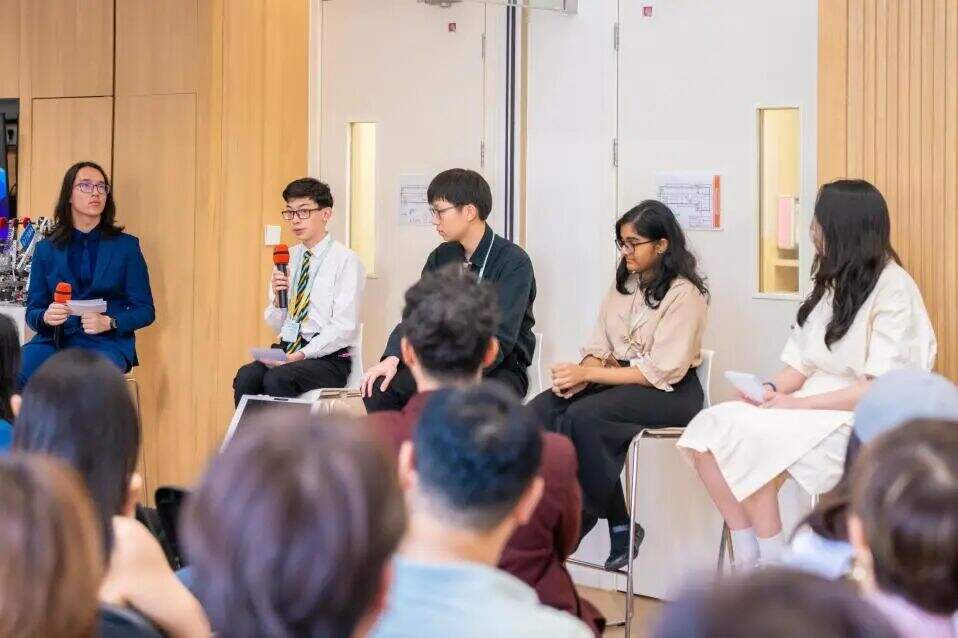
Remi speaking at an on-campus computer science event
Process, Not Perfection
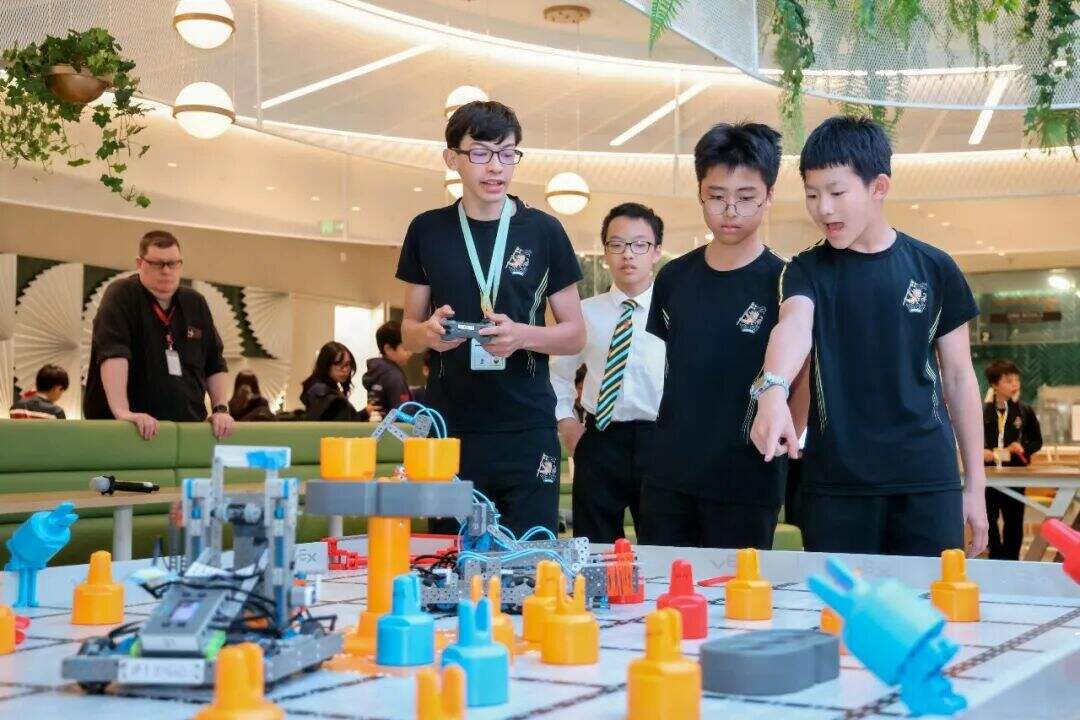
Imre admits he didn't know much about programming or Minecraft. "Stepping into his world wasn't easy," he says. Still, he found ways to help. Thinking like an engineer helped. If Remi's robot wasn't working, Imre would help him think it through: "What's the core problem? Force, positioning or motor power?" Imre asked open-ended questions, but he let Remi work things out for himself.
Imre calls it "companionship through questioning"—focusing on the process, not just the result. "We often tell him, it’s wonderful that you have passion and perseverance."
From Building Machines
to Building Teams
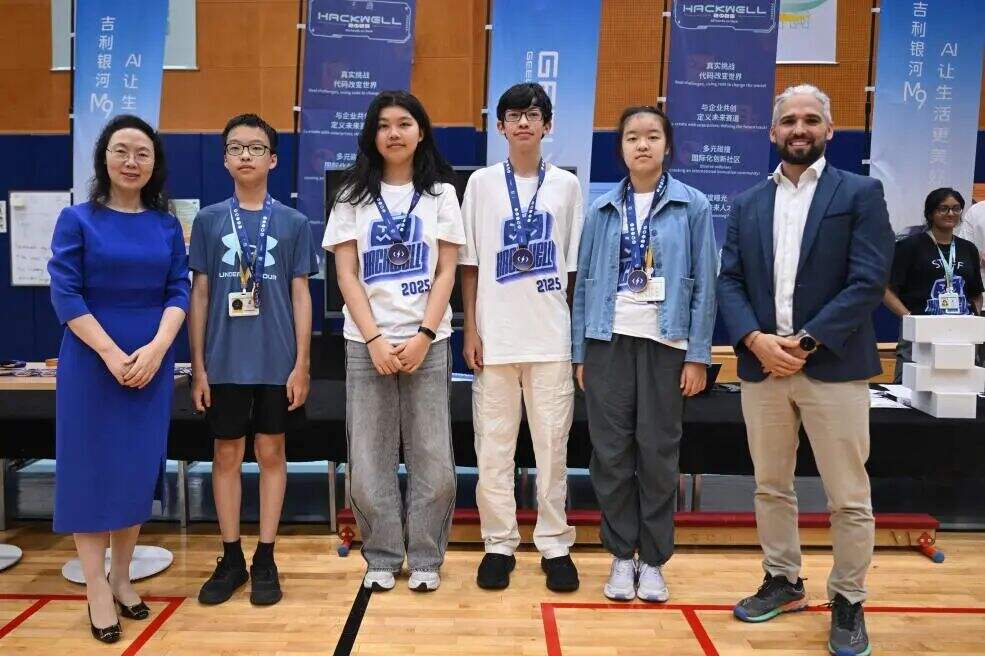
Taking part in Wellington Shanghai's VEX Robotics programme marked real progress for Remi. Imre eventually noticed Remi moving beyond just making robots work. He started cultivating soft skills like teamwork, leadership and planning. "He's learning how to lead a team towards common goals," he said.
Imre appreciates that teachers encourage pupils to run with their own ideas instead of always telling them what to do. Remi never says, "The teacher told me to do it this way," but instead, "I have an idea. I’m going to try it." Imre thinks giving children space helps them become more independent and creative.
After talking to Remi about fairness in competitions, Imre even volunteered as a VEX referee and joined the official training when the school needed more referees.
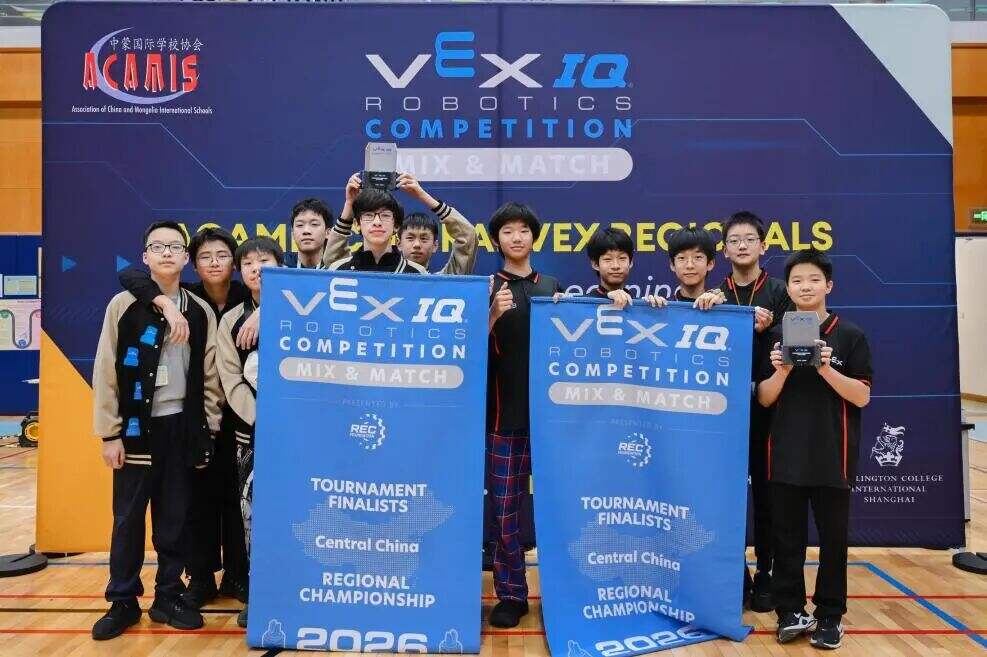
At the ACAMIS Central VEX Regionals held in Wellington, Remi's team successfully qualified for the China ACAMIS National Championships
The ACAMIS Central VEX Regionals
Different Talents, Same Support
Remi's sister, Lea, is also a Wellington pupil, but her interests are in sport, dance, design and art. Imre and his wife encourage her creativity in the same way, getting involved and exploring her interests with her.

Lea at the eMotion Dance Showcase
When asked about their hopes for their children, Imre says, "We wish them to become independent individuals, responsible for their choices, while retaining their passions." He and his wife try not to supervise homework and encourage the children to make decisions and understand the value of money early on.
Looking back, Imre says they chose a bilingual education with high standards but also space for creativity. Wellington gave their children opportunities to try new things and learn from mistakes, not just follow the curriculum.
"What we are grateful for," Imre says," is these extracurricular opportunities allowing self-exploration."
Giving the Space to Grow
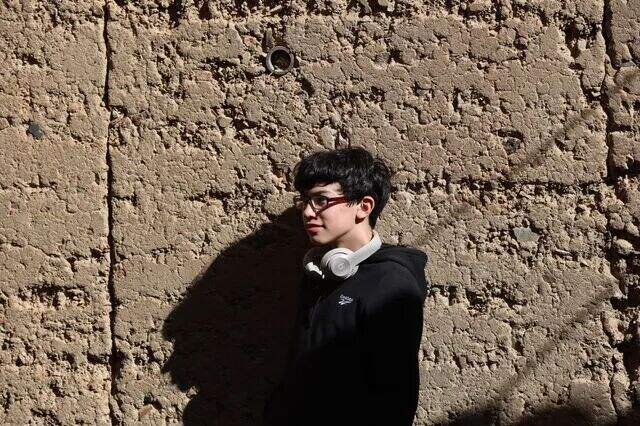
Remi and Lea continue to pursue their interests at Wellington, supported by parents who are happy to step back and let them make their own choices. For this Wellington family, encouragement means giving their children the space to explore, make mistakes, learn and grow.
Related Articles